Search turn AI notes into an essay outline and the top results are generators: paste a topic or notes, get a five-paragraph skeleton in seconds. That solves blank-page panic. It does not solve the failure mode — a fluent outline that drifts from the prompt, turns guesses into “facts,” and copies ChatGPT paste residue into your draft file.
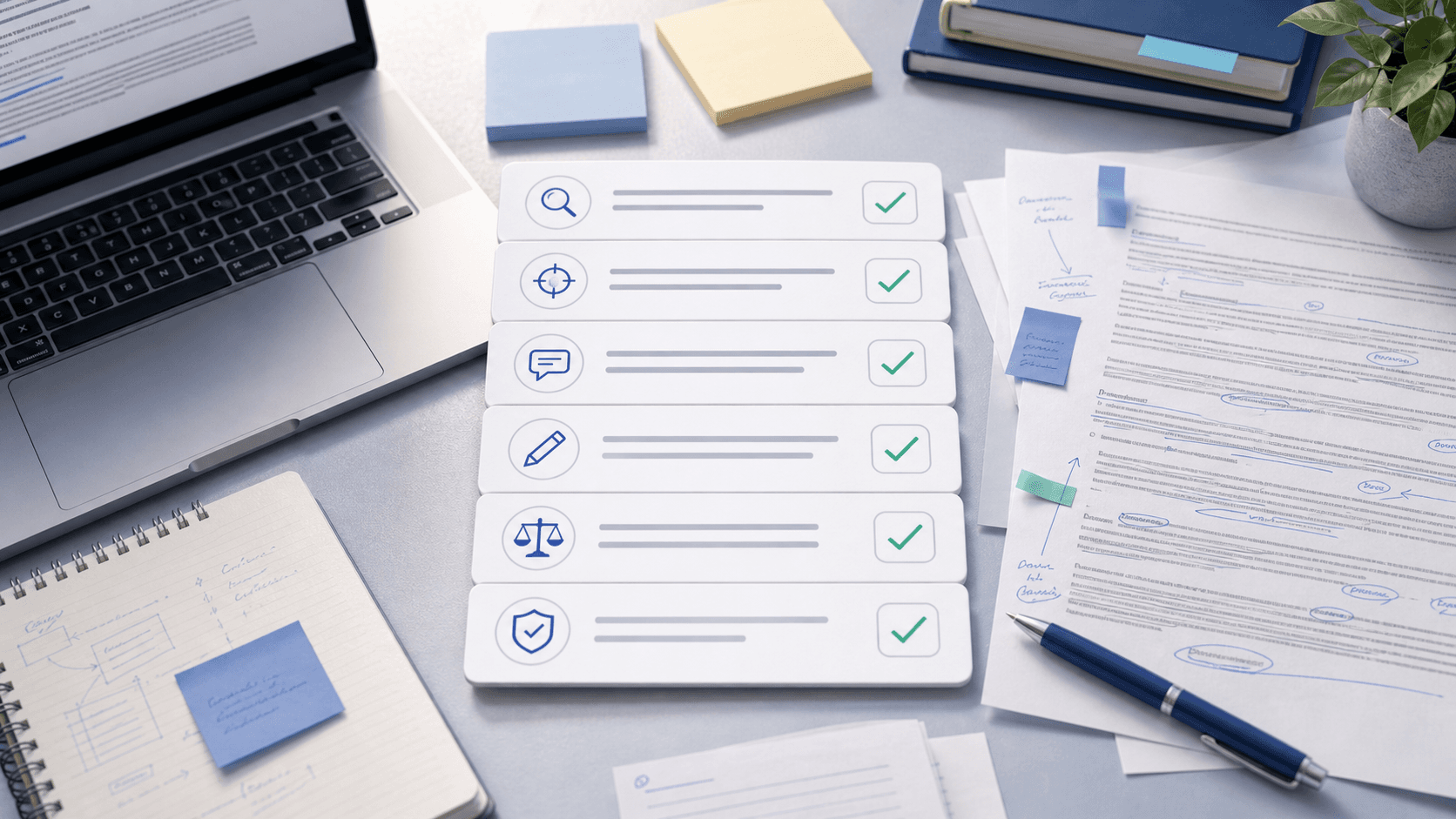
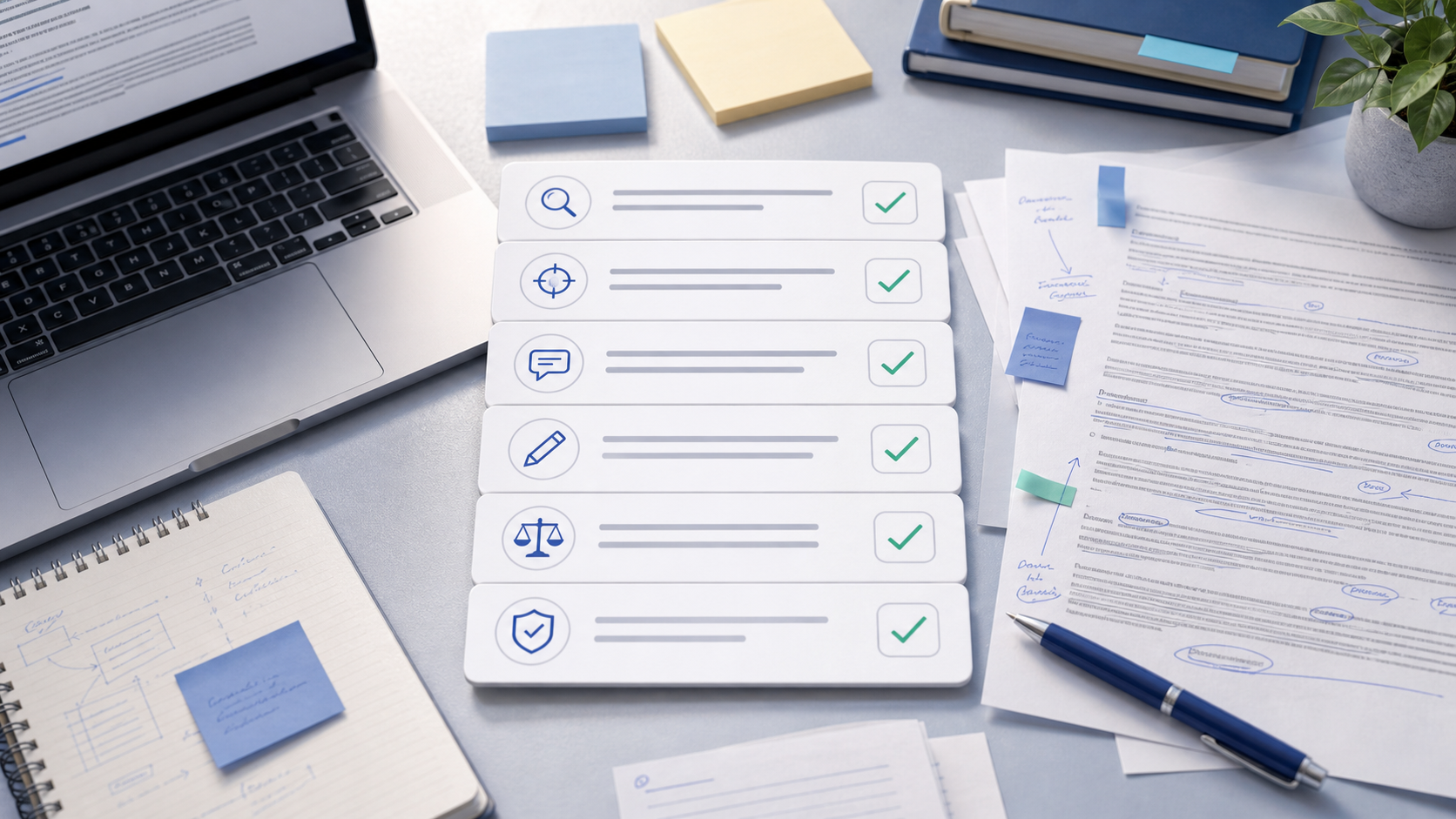
Turn AI notes into an essay outline by sorting, not generating. Clean the notes, keep only claim-like lines that serve the assignment, cluster them into sections, attach evidence stubs you can open later, write topic sentences in your voice, then draft. AI can suggest order. You decide what earns page space.
Related: ChatGPT essay writing guide · AI essay revision checklist
Key Takeaways
What generators miss
One-click outliners (topic → intro / three body / conclusion) optimize for speed. They break when:
| Failure | What it looks like |
|---|---|
| Prompt drift | “Evaluate causes” becomes a generic tour that never ranks causes |
| Evidence laundering | Research questions become declarative claims with fake certainty |
| Template lock | Balanced three-part structure when your notes need two strong sections + one counter |
| Paste residue | Unicode watermarks and stock phrases hitchhike from chat into the outline, then the draft |
The product you want is an outline you can defend line by line — every bullet tied to a stub you will verify.
The workflow (six steps)
1. Clean notes before you sort
If notes came from ChatGPT, Claude, or another chat, paste them into PassMyEssay first. The homepage is a ChatGPT watermark remover: strips invisible Unicode, flags templated AI phrases, and keeps meaning lock so cleanup does not rewrite your ideas. Export plain text into a doc labeled “Notes — not for submit.”
Why early: humanize ChatGPT text
2. Highlight claim-like sentences only
One read. Mark lines that assert:
- “Urban green space reduces heat island effect.”
- “The narrator’s unreliability undermines the trial scene.”
- “Policy Z failed because enforcement was underfunded.”
Skip for now: definitions you already know, open questions, generic background (“Climate change is important”). If a highlighted line cannot connect to the prompt, mark delete — even if it sounds smart.
3. Cluster into 3–5 sections that answer the prompt
Group claims by how they serve the assignment, not by textbook chapter titles.
| Frame | Use when |
|---|---|
| Chronological | Narrative / history |
| Compare / contrast | Two+ entities |
| Problem → evidence → implication | Policy / science |
| Thesis → objection → reply | Argumentative |
Optional AI ask: “Here are my claim bullets. Suggest two orders for a paper arguing [thesis].” Treat as option A / B. Pick or hybridize. Each section needs a working title and a one-line section job: “This section proves enforcement mattered more than wording.”
If clusters look like essay templates: why AI writing sounds robotic
4. Attach an evidence stub under every claim
Stubs, not prose:
- Author + year + page for a quote you already have
- “Lab data table 2 — percent change”
- “Case: Minneapolis 2020 pilot”
- “TODO: find enforcement budget source”
Models invent stubs that look like citations (“Johnson, 2021, p. 44”). Only keep stubs you pulled from a source you opened — or mark them TODO and verify before drafting that section.
5. Write topic sentences yourself
One rough sentence per section, in your voice. Clumsy is fine:
- “Enforcement gaps explain why Policy Z looked successful on paper but failed in practice.”
- “The trial scene only works if we read the narrator as selectively omitting testimony.”
If you cannot write the topic sentence, research more before drafting. Tone check: academic tone guide
6. Draft only after the outline is honest
Open section one → topic sentence → first stub → write the paragraph that connects them. Repeat. Do not paste whole paragraphs from chat. Stuck on phrasing? How to edit an AI paragraph
Example: remote work productivity
Prompt: Evaluate whether remote work increased productivity in knowledge jobs after 2020.
Notes (after cleanup): productivity hard to measure / some studies say up / commutes down / collaboration maybe worse / Zoom fatigue / need define productivity
Outline:
- Define productivity for this essay (output/hour vs collaborative innovation)
- Stub: OECD report summary you read
- Evidence: gains for individual task work
- Stub: Smith 2023 survey — commute time reallocation
- Evidence: collaborative creativity suffered in junior roles
- Stub: Lee 2024 cohort study — mentorship gaps
- Thesis: Net gains depend on role seniority and measurement choice
This evaluates — matching the prompt — instead of a generator’s default “pros and cons of remote work” skeleton.
Outline mistakes to avoid
- Too many sections — undergrad essays rarely need more than five body sections; merge related claims
- No counterargument — argumentative prompts need one section for the strongest objection + reply
- Conclusion first — leave a placeholder; write it after the body proves something
- Skipping cleanup — notes feel “internal,” so students skip PassMyEssay; hidden Unicode in an outline still copies into drafts
Next
After drafting: AI essay revision checklist. If brainstorming was allowed: student guide to AI disclosure. Detector panic: AI detector false positives.
Bottom line
Outlines decide what the essay proves — not prose generated in one leap from messy notes. Clean ChatGPT pastes at PassMyEssay, cluster claims that serve the prompt, attach evidence stubs, write topic sentences yourself, then draft. Let AI suggest. You sort, verify, and own the argument.
Keep Reading
Related guides
AI Detector for Essays: What to Expect Before You Paste
SERP for AI detector for essays is paste-box tools. Here is what those checkers actually score, when false positives hit, and how to clean ChatGPT watermarks first.
AI Humanizer for Turnitin: Detection Reality After Bypasser Updates
What searching AI humanizer for Turnitin really means in 2026—Turnitin’s bypasser detection, why 0% guarantees fail, and honest revision plus ChatGPT watermark cleanup.
ChatGPT Essay Writing Guide: Ethical Steps That Actually Help
Practical ChatGPT essay writing guide: clarify prompts, outline from your notes, verify sources, get paragraph feedback — plus watermark cleanup before you draft.
How to Show Your Writing Process If Your Essay Is Flagged
Copy-ready evidence packet: folder layout, timeline, source-to-sentence table, cover note, and meeting script when an AI detector flags your essay.
Make your draft clearer
Use PassMyEssay to rewrite AI-assisted text responsibly, check weak sections, and keep your meaning intact.
Try PassMyEssay