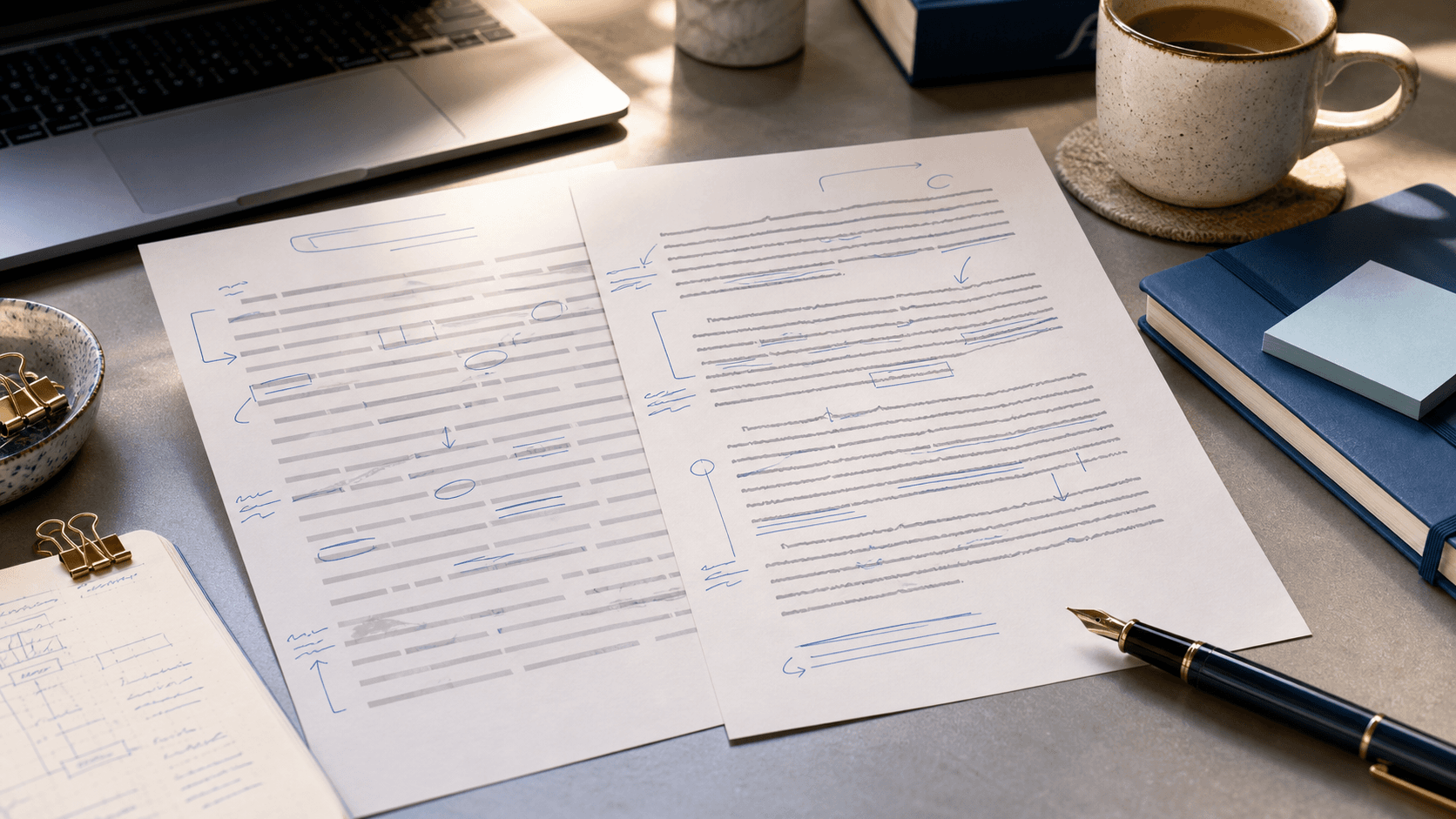
The best AI tools to humanize ChatGPT writing do not simply swap words. They help turn a useful but generic draft into writing that sounds more specific, more natural, and more like a person made choices.
ChatGPT can produce a solid first draft quickly. That is why people use it. But the output often has familiar problems: smooth but vague claims, predictable transitions, balanced paragraphs that feel too neat, and a tone that sounds like it belongs nowhere in particular.
Humanizing ChatGPT writing is not about making the text messy. It is about making it intentional.
This guide explains how to compare tools for humanizing ChatGPT output, what features matter, and how to build a responsible workflow for essays, blog posts, emails, and applications.
A step-by-step humanize ChatGPT text workflow matters because ChatGPT drafts usually need more than one rewrite pass.
Why ChatGPT writing often needs humanizing
ChatGPT is trained to be helpful, coherent, and broadly acceptable. That can make the writing sound safe.
Safe writing has a pattern. It introduces both sides. It uses transitions like "furthermore" and "in conclusion." It makes claims that are true but not surprising. It avoids sharp specificity unless prompted.
That is useful for brainstorming, but it can feel lifeless in a final draft.
Humanizing fixes the parts that feel too automatic. It varies rhythm. It adds clearer emphasis. It removes generic filler. It keeps the argument but makes the delivery feel more owned.
If your draft sounds robotic, the problem is usually pattern-based: repeated transitions, flat rhythm, and generic claims.
Best overall workflow: PassMyEssay
PassMyEssay is useful when your goal is to humanize ChatGPT writing and then check whether the result still has AI-like sections.
The workflow is direct: paste the draft, humanize it, review the output, run an AI check, and revise again if needed. This is especially useful for long-form writing because the tool focuses on the draft instead of surrounding you with unrelated options.
The best fit is a writer who has already generated or drafted text and wants it to sound more natural without losing meaning.
That includes students revising allowed AI-assisted drafts, bloggers editing generic sections, and professionals polishing text that sounds too template-like.
The tool does not replace judgment. You still need to verify facts, citations, and tone. But it gives you a focused revision loop.
Best for quick sentence rewrites
If you only need to fix one awkward sentence, a paraphrasing tool may be enough.
Sentence rewrite tools are helpful for small problems: reducing repetition, simplifying wording, or seeing alternate phrasing.
They are less useful when the whole paragraph sounds like AI. ChatGPT writing often has paragraph-level patterns. The sentences may be correct, but the paragraph still feels generic because every line moves with the same rhythm.
Use quick rewrite tools when the problem is local. Use a humanizer when the draft needs deeper rhythm, specificity, and tone work.
Best for detector-aware editing
Some writers use humanizers because they are worried about AI detectors. That is understandable, but it can lead to bad editing if the only goal is lowering a number.
Detector-aware editing is useful when it highlights patterns. It should help you see which sections sound predictable and why.
PassMyEssay's AI check is designed for that kind of feedback. The point is not to treat a score as proof. The point is to find sections that need a more human revision.
Best for academic writing
Humanizing ChatGPT for academic writing requires caution.
Academic drafts need clear claims, evidence, citations, and accurate reasoning. A rewrite that sounds more casual is not automatically better.
Choose a tool that preserves meaning and supports academic tone. It should not exaggerate claims, invent examples, or remove source references.
When revising an essay, compare the original and output carefully. Check every source, every quote, and every claim.
Academic writing needs a stricter humanizer standard because tone, evidence, and argument precision matter more than surface fluency.
Best for SEO articles
ChatGPT often produces SEO drafts that look complete but feel thin. The headings are obvious. The examples are generic. The article repeats the same advice in different words.
Humanizing can improve rhythm, but SEO content also needs search intent. Before using any humanizer, ask whether the draft actually answers the query.
A good SEO workflow looks like this:
- Clarify the search intent.
- Add examples, comparisons, and original judgment.
- Remove generic filler.
- Humanize stiff sections.
- Add contextual internal links.
- Read the article as a person, not a checklist.
Our guide on how to avoid generic AI writing is useful for this stage.
Best for applications and personal writing
Application essays, scholarship statements, and personal bios need voice.
ChatGPT can help organize thoughts, but it often flattens personal detail. A humanizer should not remove the quirks that make the story yours.
Test any tool with a personal paragraph. Does the output still sound like you? Does it keep the detail? Does it make the emotional point clearer without making it dramatic?
If the output sounds polished but anonymous, reject it.
What features to compare
When choosing a tool to humanize ChatGPT writing, compare:
- Rewrite depth.
- Tone options.
- Side-by-side comparison.
- AI checking.
- Long-form support.
- History.
- Copy controls.
- Privacy.
- Pricing.
- Responsible use language.
The strongest tools make editing easier without hiding what changed.
The weakest tools create dramatic output that may no longer say what the draft meant.
A simple test prompt
Paste the same ChatGPT paragraph into every tool you are considering. Choose a paragraph that includes a claim, an example, and an explanation.
After the rewrite, ask:
- Did the claim stay the same?
- Did the example survive?
- Did the tone fit the audience?
- Did the paragraph become less generic?
- Did the tool add unsupported details?
- Does the output sound like a real person?
If you cannot answer yes to most of those questions, the tool is not a good fit.
Common mistakes
The first mistake is over-humanizing. Some tools make text sound strange by forcing too much variation.
The second mistake is trusting the output without reading it. A humanizer can change meaning.
The third mistake is using the same tone for every format. An essay, blog post, and client email need different voices.
The fourth mistake is chasing perfect detector scores. AI detection is not exact.
The fifth mistake is ignoring policy. If your school or workplace restricts AI rewriting, follow the rules.
FAQ
What is the best tool to humanize ChatGPT writing?
The best tool depends on your use case. PassMyEssay is a strong fit when you want humanizing and AI checking in one clean workspace, especially for essays and long-form drafts.
Can ChatGPT humanize its own writing?
It can help, but generic prompts like "make it sound human" often produce another polished AI-style draft. A dedicated humanizer may give a more focused revision workflow.
Does humanizing guarantee AI detectors will pass the text?
No. No responsible tool should promise that. Humanizing should improve clarity, rhythm, and specificity. Detection scores are only signals.
Should I edit the output myself?
Yes. Always review the output, restore details if needed, and make sure the final draft reflects your understanding.
How to prepare ChatGPT text before humanizing
The best results usually come from improving the draft before you put it into a humanizer.
Start by removing empty introductions. ChatGPT often opens with broad context that the reader already knows. Cut those lines or replace them with a sharper point.
Next, add examples. If the draft says "AI can help students study more effectively," add the actual example: flashcards from lecture notes, feedback on a thesis, or a practice quiz before an exam.
Then check claims. ChatGPT may use confident wording for ideas that need caution. Replace "proves" with "suggests" when that is more accurate.
After that, humanize the paragraph. The tool will have better material to work with.
This order produces stronger writing than asking a humanizer to fix a bland draft from scratch.
A before-and-after standard
Use this standard when judging output.
Before humanizing, identify the purpose of the paragraph in one sentence. For example: "This paragraph explains why students should use AI for outlining, not final drafting."
After humanizing, check whether that purpose is still clear.
If the output sounds smoother but the purpose becomes fuzzy, reject it.
If the output is more natural and the purpose is clearer, keep it.
This simple test protects you from attractive but weak rewrites.
What PassMyEssay is best at
PassMyEssay is useful when ChatGPT text needs both humanizing and checking.
The humanizer improves rhythm and naturalness. The AI check helps identify sections that still look predictable. The side-by-side layout helps you keep meaning under control.
That makes it a good fit for writers who have moved beyond prompt experiments and need a real editing workflow.
It is especially useful for essays because academic claims need careful handling. A rewrite should not make the paragraph more dramatic just to sound human.
When manual editing beats tools
Some parts of ChatGPT writing should be edited manually before any tool touches them.
Facts need verification. Sources need checking. Personal stories need your memory and judgment. Course-specific terms need accuracy. Quotes should not be rewritten.
Humanizers can improve prose, but they cannot know whether a claim is true.
If you combine manual editing with humanizing, the final text will usually be much stronger.
A final checklist
Before copying humanized ChatGPT text into your document, ask:
- Did I add my own examples?
- Did I verify facts?
- Did I keep citations and source meaning?
- Did the rewrite preserve my point?
- Does the tone fit the audience?
- Do I understand every sentence?
- Did I follow the rules for this use case?
If yes, the tool has supported your writing instead of replacing it.
Search intent takeaway
If you want to humanize ChatGPT writing, remember that the strongest improvement often happens before the humanizer.
Add specific examples. Remove filler. Verify claims. Decide who the reader is. Then use the tool to improve rhythm and naturalness.
PassMyEssay is useful because it lets you humanize and check the result in one place. That is better than repeatedly asking ChatGPT to "sound more human," which often produces another generic version.
For essays, be especially careful with claims and citations. For SEO content, make sure the article actually answers the query. For personal writing, protect your voice.
The right tool helps turn a rough AI draft into a better human-edited draft. It does not replace the human edit.
Quick recommendation
If you are humanizing ChatGPT writing, do not start by asking which tool is most powerful. Start by making the draft worth humanizing.
Add your examples, verify the claims, and remove generic filler. Then use PassMyEssay to improve naturalness and check for AI-like patterns.
This order works because tools perform better when the input has substance. A bland ChatGPT paragraph can only be improved so much by style changes. A specific paragraph can become much stronger after humanizing.
Use the tool as an editor, not as a replacement for your point of view.
Final practical rule
Use the tool only after you can explain what the paragraph should say. If you cannot summarize the point in your own words, the humanized version may sound better while still being weak. A clear intention before humanizing leads to better output after humanizing.
One more note: ChatGPT text often improves most when you add your own details before the rewrite. The tool can polish voice, but the human details make the paragraph worth reading. Without those details, every output starts from the same generic base again and stays forgettable for readers who need value from the text.
Good tools should make ChatGPT drafts easier to revise, not harder to recognize as your own work.
Final thoughts
The best AI tools to humanize ChatGPT writing help you turn a useful rough draft into a clearer final draft.
Choose a tool that preserves meaning, respects context, and gives you control. Then use your own judgment. That is where the writing becomes yours.
Keep Reading
Related guides
How to Humanize ChatGPT Text Without Making It Worse
Learn how to humanize ChatGPT text by preserving meaning, adding examples, improving rhythm, and avoiding risky rewrite habits.
AI Humanizer for Turnitin: What Students Should Know First
A responsible guide to AI humanizers and Turnitin, including what humanizers can do, what they cannot promise, and how students should revise essays safely.
AI Humanizer vs AI Rewriter: Which Tool Does Your Draft Need?
Compare an AI humanizer vs AI rewriter and learn when to use each for essays, ChatGPT drafts, SEO content, tone, and detector feedback.
ChatGPT Detector: How Checkers Read ChatGPT Essays and Drafts
Learn what a ChatGPT detector checks, why results vary, what flagged sections usually mean, and how to revise ChatGPT-assisted writing responsibly.
Make your draft clearer
Use PassMyEssay to rewrite AI-assisted text responsibly, check weak sections, and keep your meaning intact.
Try PassMyEssay