
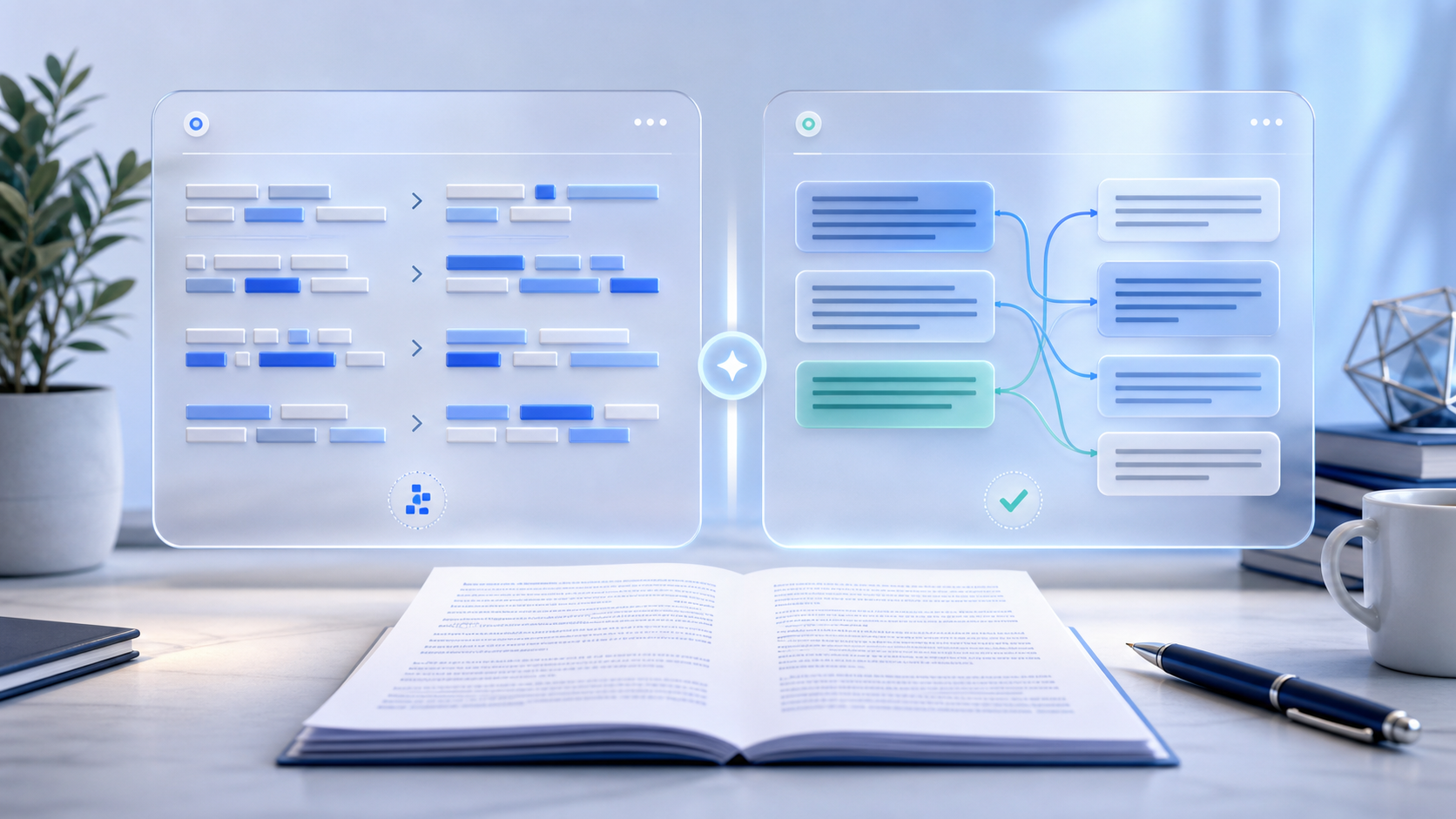
AI proofreading and AI humanizing sound similar because both are editing tools. They are not the same.
A proofreading tool usually looks for surface problems: spelling, grammar, punctuation, awkward phrasing, and sometimes clarity. An AI humanizer looks deeper at rhythm, tone, flow, and whether a draft sounds too generic or machine-like.
That difference matters. If your draft has grammar mistakes, proofreading may be enough. If your draft is technically correct but sounds robotic, proofreading will not solve the real problem.
This guide explains how to choose between AI proofreading and an AI humanizer, especially for essays and academic writing. The same decision becomes sharper when you compare humanizers with paraphrasing tools, because proofreading, paraphrasing, and humanizing all solve different problems.
What AI proofreading does
AI proofreading checks the surface of the writing.
It may correct:
- Spelling mistakes
- Grammar errors
- Punctuation problems
- Missing words
- Awkward sentence structure
- Basic clarity issues
- Inconsistent capitalization
Proofreading is useful near the end of the writing process. Once your thesis, evidence, and structure are working, proofreading can help clean the final draft.
For example, if your sentence says:
"The sources shows that students responds differently to online feedback.
A proofreading tool can correct subject-verb agreement:
"The sources show that students respond differently to online feedback.
That is a clear proofreading job.
What an AI humanizer does
An AI humanizer focuses on how the writing reads.
It may improve:
- Sentence rhythm
- Natural flow
- Tone consistency
- Repetitive phrasing
- Overly generic wording
- Paragraph transitions
- Robotic structure
For example, a sentence may be grammatically correct but still sound flat:
"It is important to note that AI tools can be beneficial for students in a variety of educational contexts.
A humanized version might say:
"AI tools can help students in specific moments, especially when they are stuck on planning, revision, or explaining a difficult reading.
The second sentence is not just cleaner. It is more specific.
When this is the problem, the draft is usually showing the same patterns that explain why AI writing sounds robotic: flat rhythm, generic phrasing, and paragraphs that never quite commit.
The easiest way to decide
Ask one question:
Is the draft wrong, or does it sound wrong?
If the draft has grammar errors, missing punctuation, and awkward mistakes, use proofreading.
If the draft has correct grammar but sounds stiff, repetitive, generic, or AI-like, use a humanizer.
If the draft has a weak argument, missing evidence, or fake citations, neither tool is enough. You need manual revision first.
This order matters. Do not humanize a paragraph before you know what it is supposed to prove. Do not proofread an essay before the structure is fixed. Editing works best when you fix the biggest problems first.
When proofreading is enough
Proofreading is enough when the draft already sounds like you and mostly needs cleanup.
This might be the case if:
- You wrote the essay yourself.
- The thesis is clear.
- Sources are accurate.
- Paragraphs have evidence.
- The tone fits the assignment.
- The main issue is grammar or clarity.
In that situation, a proofreading tool can help polish the final version. It can catch mistakes you missed because you have been staring at the draft too long.
Still, review every suggestion. Proofreading tools can make changes that are technically correct but not ideal for your meaning.
When you need a humanizer
You may need an AI humanizer when the draft sounds too smooth in a bad way.
Common signs include:
- Every paragraph has the same shape.
- The writing uses broad claims instead of examples.
- Transitions feel automatic.
- The conclusion only repeats the introduction.
- Sentences are correct but lifeless.
- The draft sounds like it could belong to anyone.
This often happens with AI-assisted writing. It can also happen with human writing when a student tries too hard to sound formal.
A good humanizer can help, but it should not erase your meaning. Before using a tool on a full essay, make sure the rewrite can humanize AI text without losing your voice.
When neither tool is enough
Some drafts do not need proofreading or humanizing first. They need rebuilding.
If the thesis is vague, fix the thesis.
If the source is fake, remove it.
If the paragraph has no evidence, add evidence.
If the essay does not answer the prompt, rewrite the structure.
Proofreading and humanizing are editing layers. They work best after the essay has something real to edit.
This is why many students feel frustrated after running a weak draft through several tools. The writing may become smoother, but the essay still feels empty. The tool polished the surface while the core problem remained.
How the tools affect AI detector scores
Proofreading and humanizing can both affect AI detector scores, but not in a predictable way.
Proofreading may make a draft cleaner and more predictable, which could sometimes increase an AI-like score. Humanizing may reduce repetitive patterns and improve naturalness, which could lower a score. But detector behavior varies.
Do not choose a tool only to chase a number. Use the tool to fix the writing problem.
If a detector flags your essay, the score should lead to review, not panic. The first step is understanding what an AI detector score can and cannot prove.
A practical editing sequence
Use this order for most essays:
- Check the assignment rules.
- Fix the thesis.
- Verify sources.
- Strengthen paragraph evidence.
- Improve transitions.
- Use a humanizer if the writing sounds robotic and rewriting support is allowed.
- Proofread for grammar and punctuation.
- Read the final version out loud.
Notice that proofreading comes near the end. That is because grammar cleanup is easiest once the sentence is actually worth keeping.
Humanizing also comes after substance. A tool cannot make a weak argument strong just by changing rhythm.
How to compare outputs
If you use both tools, compare outputs carefully.
Make a copy of your original paragraph. Run one version through proofreading. Run another through humanizing. Then ask:
- Which version keeps the meaning?
- Which version sounds more natural?
- Which version fits the assignment?
- Which version is easier to explain?
- Did either tool remove an important detail?
Sometimes the best final paragraph is a mix. You might keep the humanizer's first sentence, restore your original example, and use the proofreader's grammar fix.
That is normal. Tools suggest. Writers decide.
A side-by-side example
Original:
"AI tools are useful in education because they help students with many things and make the writing process better.
Proofread version:
"AI tools are useful in education because they help students with many tasks and improve the writing process.
The proofread version is cleaner, but it is still generic.
Humanized version:
"AI tools are most useful when they help students move from messy notes to a clearer plan, but the student still has to choose the argument and check the evidence.
The humanized version changes the quality of the sentence. It adds specificity and a clearer point.
This is the difference. Proofreading corrects. Humanizing reshapes.
How to combine both tools
You can use both tools if you use them in the right order.
First, revise meaning manually. Make sure the paragraph says something worth keeping.
Second, use a humanizer if the paragraph sounds robotic or too generic. Compare the output with the original.
Third, proofread the final version. Humanizing can introduce small errors or awkward phrasing, so proofreading still matters.
Fourth, read in context. A sentence that sounds good alone may not fit the paragraph.
This sequence protects quality. It also stops you from over-editing.
When a humanizer is the wrong tool
A humanizer is not the right tool if the draft has no evidence, fake citations, or a thesis that does not answer the prompt.
It is also not the right tool if the assignment forbids AI rewriting.
In those situations, use manual revision. Go back to the source, rebuild the claim, and write the paragraph from your own understanding.
Tools are helpful only when the task matches the problem.
Frequently asked questions
Is AI proofreading the same as an AI humanizer?
No. Proofreading focuses on errors and clarity. A humanizer focuses on natural rhythm, tone, and reducing robotic phrasing.
Which tool should I use first?
Fix content and structure first. Then use a humanizer if the draft sounds robotic. Use proofreading near the end for grammar and punctuation.
Can proofreading make AI writing sound human?
Not usually. Proofreading can make writing correct, but correct writing can still sound generic or machine-like.
Can a humanizer fix grammar?
It may fix grammar as part of rewriting, but you should still proofread the final draft.
What if the tool changes my meaning?
Reject the change. Meaning matters more than smoothness. Compare the output with your original before using it.
More questions about editing tools
Can I use proofreading and humanizing on the same paragraph?
Yes, but use them in order. Humanize first if the paragraph sounds robotic, then proofread the final version. If you proofread first and then rewrite, you may introduce new sentence issues during the rewrite.
Is a humanizer better than a grammar checker?
Not always. It depends on the problem. If the draft has grammar mistakes, use a grammar checker. If the draft is correct but stiff, use a humanizer. If the argument is weak, use neither until you revise the substance.
Can proofreading make writing sound robotic?
It can if every suggestion pushes the writing toward the same polished pattern. Review suggestions carefully and keep sentences that sound natural and clear.
Can a humanizer make writing too casual?
Yes. A weak humanizer may make academic writing sound like a blog post or social caption. Choose the tone carefully and compare the output with the assignment.
How do I know if a tool went too far?
The tool went too far if it changes meaning, removes examples, adds unsupported claims, or makes the tone wrong for the reader. Smoothness is not worth those losses.
What should I use for final submission?
Use your own judgment last. A good final pass checks meaning, sources, tone, grammar, formatting, and policy. Tools can help with each layer, but no tool should replace your final read.
One last practical test
If you are still unsure which tool you need, make two copies of one paragraph.
Run one copy through a proofreader. Run the other through a humanizer. Then compare both against the original.
The proofread version should mainly fix errors. If it rewrites the paragraph heavily, check whether you asked for too much. The humanized version should improve flow and specificity. If it only swaps words, it is not doing enough.
Now ask which version solves the real problem.
If the original paragraph had grammar mistakes, the proofread version may win. If the original was correct but robotic, the humanized version may win. If both versions still have a vague claim, neither tool solved the deeper issue.
This comparison teaches you how to diagnose drafts. Over time, you will stop asking "which tool is better?" and start asking "what problem am I fixing?"
That is the question that leads to better writing.
Search-intent takeaway
People compare AI proofreading vs AI humanizer because they can feel something is wrong with a draft but do not know which tool fits.
The answer depends on the problem. Errors need proofreading. Robotic flow needs humanizing. Weak arguments need manual revision. These are different layers of writing.
If you choose the wrong layer, you waste time. A proofread generic paragraph is still generic. A humanized unsupported paragraph is still unsupported. A polished sentence can still fail the assignment.
Diagnose first. Then edit. That habit will improve every draft, whether you are writing an essay, blog post, email, or application.
It also keeps tools in their proper role: useful assistants, not final editors.
Final thoughts
AI proofreading and AI humanizing solve different problems.
Use proofreading when the draft is mostly strong but needs cleanup. Use a humanizer when the draft is accurate but sounds robotic, repetitive, or generic. Use manual revision when the thesis, evidence, or structure is weak.
The best editing choice starts with diagnosis. Name the problem first. Then choose the tool.
Keep Reading
Related guides
How to Humanize ChatGPT Text Without Making It Worse
Learn how to humanize ChatGPT text by preserving meaning, adding examples, improving rhythm, and avoiding risky rewrite habits.
AI Humanizer for Turnitin: What Students Should Know First
A responsible guide to AI humanizers and Turnitin, including what humanizers can do, what they cannot promise, and how students should revise essays safely.
AI Humanizer vs AI Rewriter: Which Tool Does Your Draft Need?
Compare an AI humanizer vs AI rewriter and learn when to use each for essays, ChatGPT drafts, SEO content, tone, and detector feedback.
What Is an AI Humanizer? A Practical Guide for Better AI Text
Learn what an AI humanizer does, how it differs from a paraphraser, and how to use one responsibly for clearer writing.
Make your draft clearer
Use PassMyEssay to rewrite AI-assisted text responsibly, check weak sections, and keep your meaning intact.
Try PassMyEssay